

Tawanda Muchehiwa, Zimbabwe
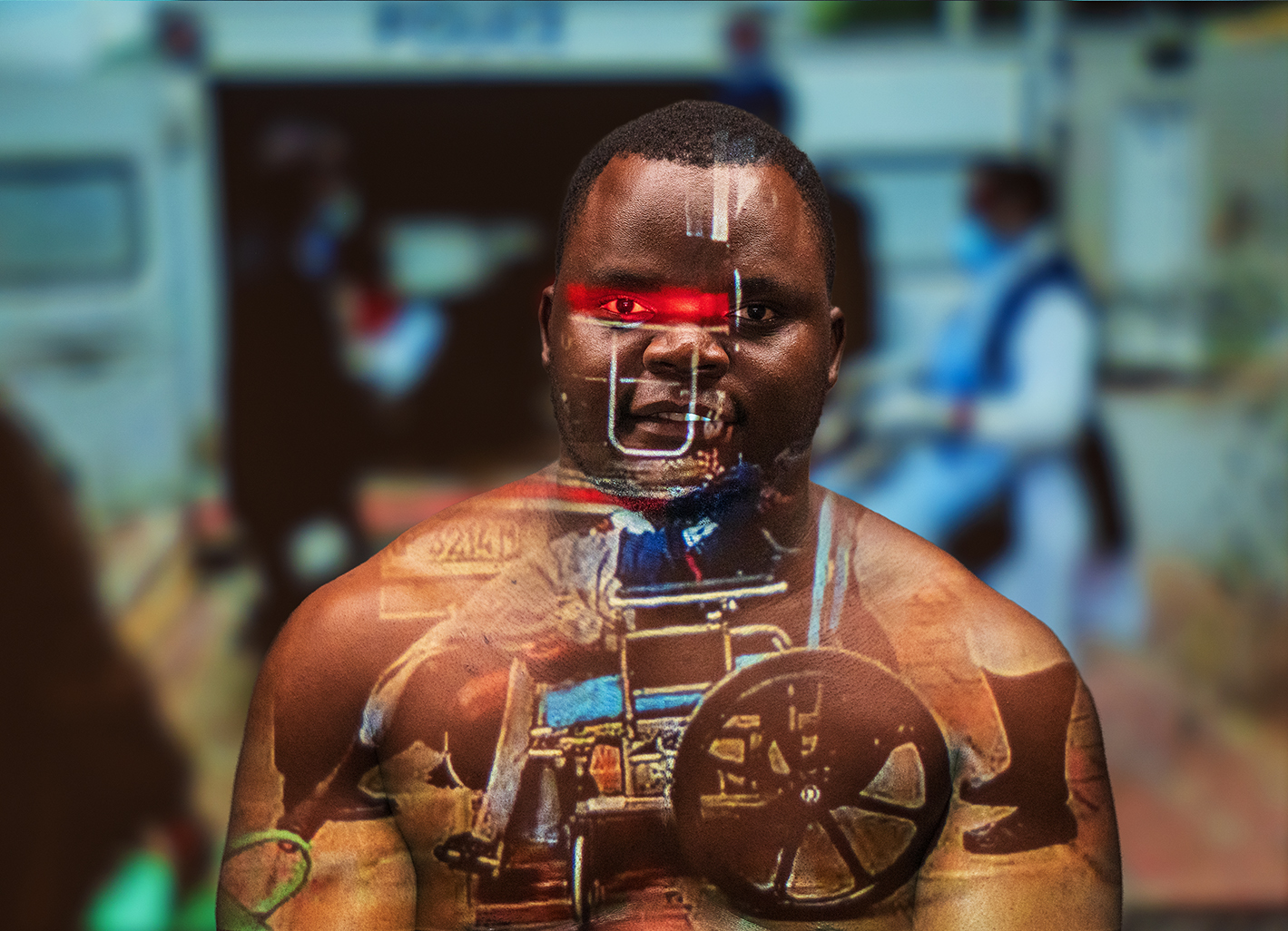
“I often wake up in the middle of the night sweating profusely, with a pulsating headache. During my ordeal, I had made peace with death when I felt the gun on the back of my head. I was convinced I was going to die. But then one of my captors said, ‘we are not going to kill you just yet; we are going to torture you first.’ I never get back to sleep.
I am the nephew of an investigative journalist and was a media student at MSU in Zimbabwe. I was not in any political party structure, but I was friends with some MDC Alliance youth activists. Just after midday on July 30, the eve of planned anti-government protests, I was sitting in a vehicle outside a hardware shop in Bulawayo when I was abducted by men working for the regime, which was all captured on CCTV.
They pointed an AK-47 at my head and said, if you scream or raise your head, we’ll shoot you right now. One of the guys was sitting on my stomach and another on my head. I complained that I couldn’t breathe, for which I received a punch and was told ‘you are not George Floyd and this not America, and anyway we don’t want you to breathe’.
They accused me of helping coordinate the protest planned for the following day. President Emerson Mnangagwa had described the demonstrations as “an insurrection” and deployed the army and police onto the streets. They also wanted information about my uncle and to know the sources for his independent news site.
I suffered horrific abuse at the hands of five agents over the next three days. I was strung up on a v-shaped tree with my buttocks and the soles of my feet flailed with sticks. When I was untied, my captors sexually humiliated me and then did something I am still not comfortable to talk about.
Afterwards, I was taken to a farmhouse where the interrogation continued with more beatings. I was forced to chant slogans from the ruling ZANU-PF party and to drink my own blood-stained urine.
My whereabouts remained unknown until human rights lawyers filed a habeas corpus application at the Bulawayo High Court. The judge accepted that the police knew who was holding me. That evening, after the order was granted, my abductors dumped me near my uncle’s house, barely able to walk. Along the way, they identified themselves as “ferrets” at police checkpoints—a police unit that human rights lawyers and civil rights groups have linked to civilian abductions.
The projected photo shows me in a wheelchair after my ordeal. I was taken to court and presented before the magistrate to comply with the High Court order, in a condition that shocked everyone there.
At the hospital, the doctors diagnosed that beyond my visible injuries, my kidneys were failing. I was in such severe pain that I did not believe I would survive, and I feared my abductors might still come after me.
I developed post-traumatic stress disorder and needed counselling and psychosocial support. This led to me attempting suicide.
Starting over in a new country is especially difficult when it is involuntary – being forced to leave your home country because of trauma inflicted by those meant to protect you.”